
The Orthodox Wedding Ceremony, Explained
An Orthodox Christian wedding is a sacrament made of two services celebrated back to back: the Betrothal and the Crowning, joined by the common cup and the Dance of Isaiah. There are no spoken vows in the Western sense, the prayers and the rite carry the marriage. Here is what happens, in order.
The Betrothal: the blessing of the rings
The service begins, often at the entrance or in the narthex, with the Betrothal. The priest blesses two rings and the couple (or their sponsor) exchanges them three times, a gesture repeated throughout the service as a sign of the Holy Trinity. The threefold exchange signifies that what one lacks the other supplies; the rings are a pledge before God rather than a contract between two parties.
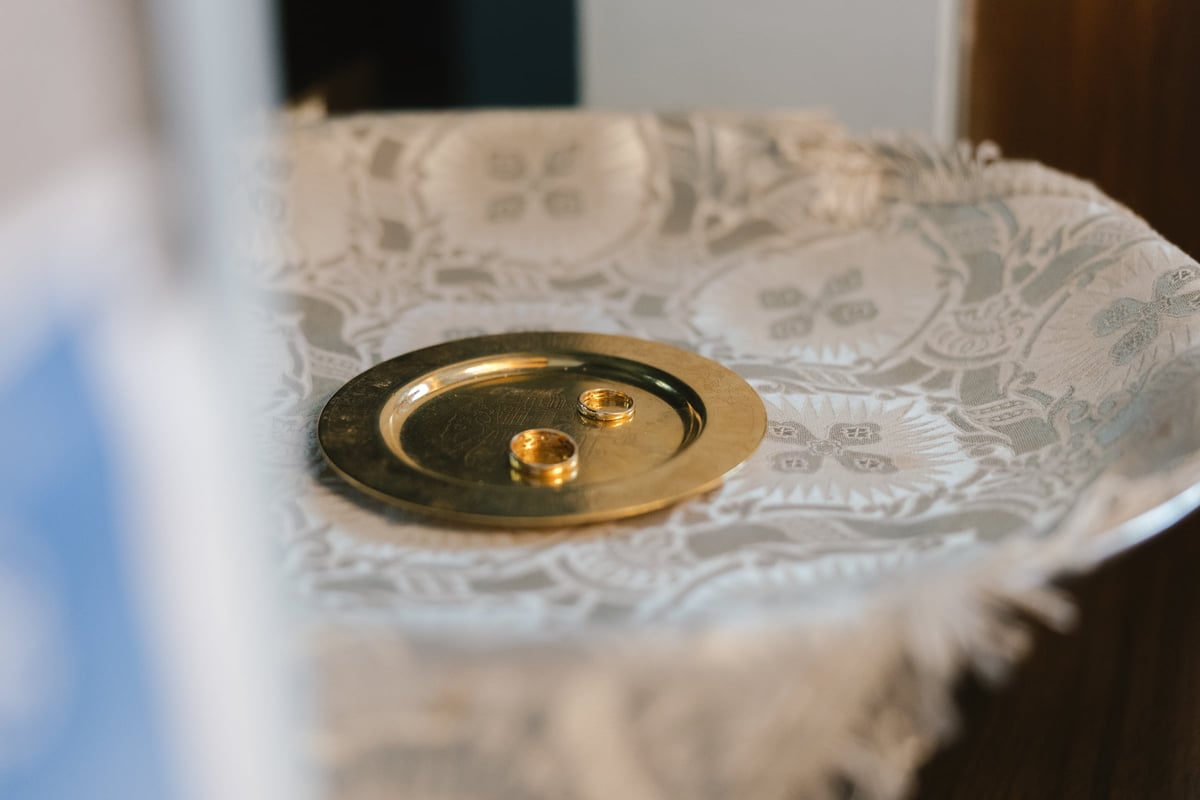
The Crowning: the heart of the sacrament
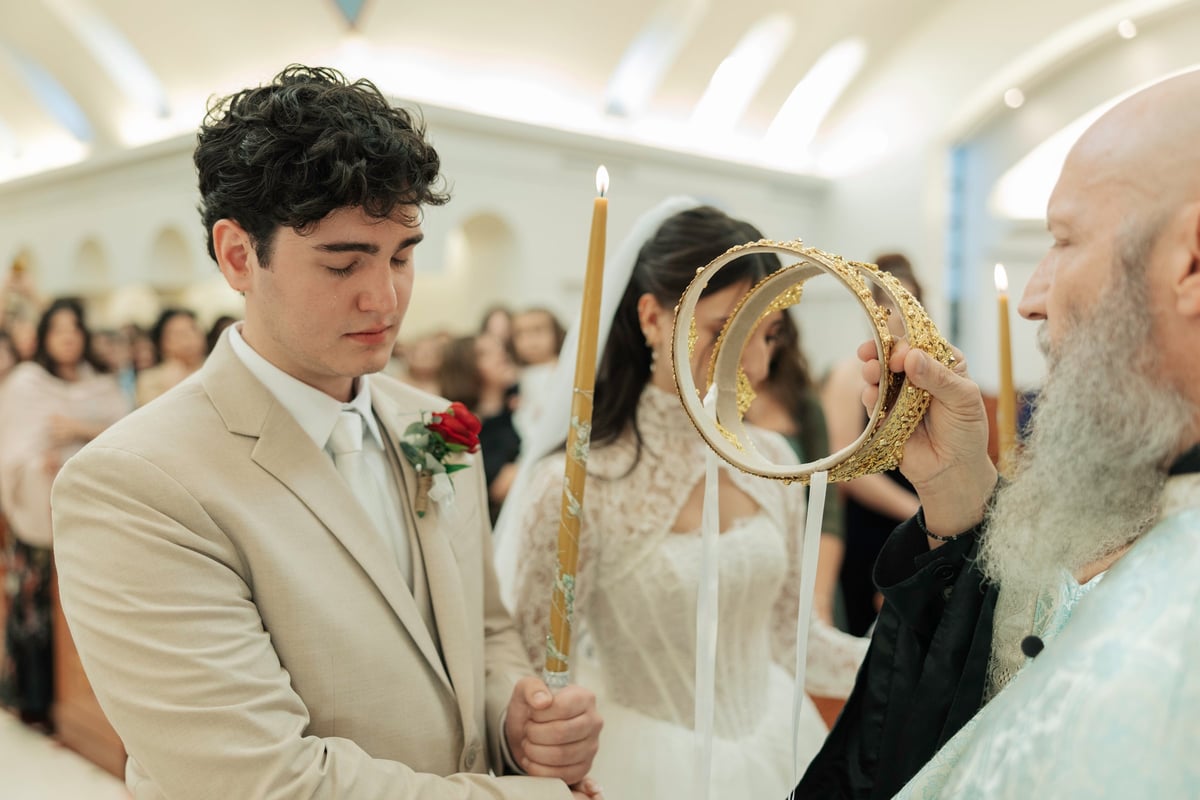
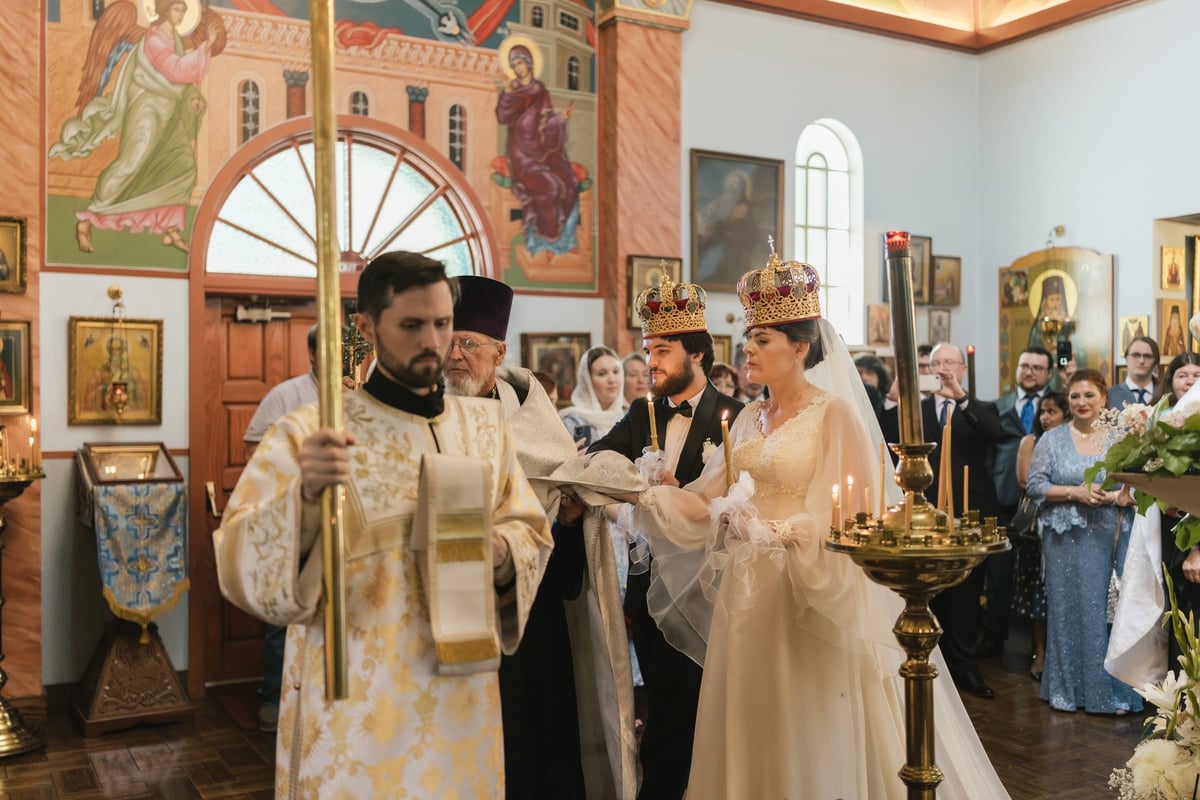
The couple then moves to a small table, the tetrapod, at the center of the church for the Crowning, which gives the service its name in several languages (Stefanoma in Greek, Venchanie in Slavic usage, Cununia in Romanian). The priest places, or the sponsors hold above the couple's heads, two crowns, in Greek practice joined by a single ribbon. In the Greek and Antiochian traditions the crowns (Stephana) are usually set on the heads; in the Russian and Serbian traditions the crowns (ventsy) are usually held aloft by the witnesses for the length of the service.
The crowns are crowns of martyrdom and of the kingdom, a sign that the couple are founding a small church, a household, and are called to give themselves to one another completely. The sponsor, the koumbaros (Greek), svideteli (Russian), kumovi (Serbian) or nași (Romanian), exchanges the crowns three times over the couple's heads.
The readings and the common cup
The Epistle (from St. Paul to the Ephesians) and the Gospel (the wedding at Cana, where Christ turned water into wine) are read. The priest then offers the couple a common cup of wine three times each, recalling Cana and signifying that from this day they share one life, one joy, and one cup of sorrows.
The Dance of Isaiah
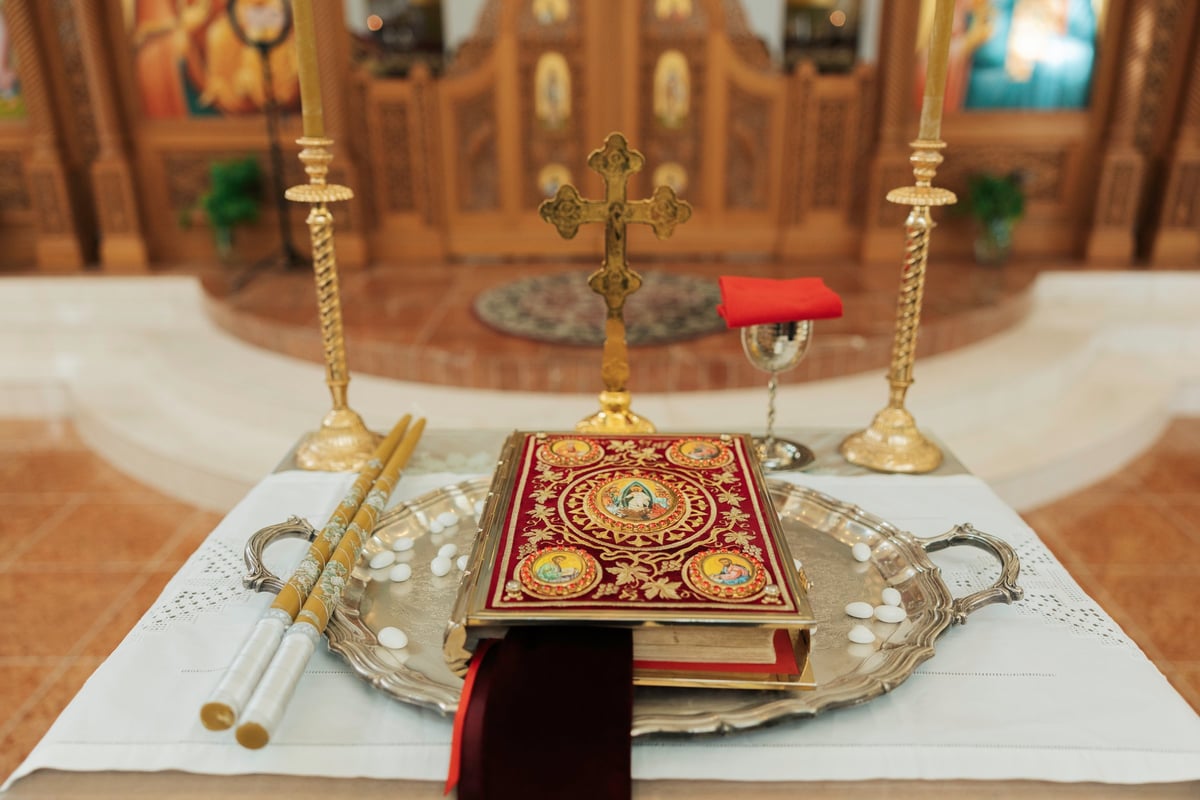
Still crowned, the couple follows the priest three times around the tetrapod in a slow procession as the choir chants the hymns of Isaiah, the martyrs, and glory to the apostles. This is the Dance of Isaiah, the couple's first steps together as husband and wife, led by the Church and circling the Gospel and the cross at the center of the table.
The removal of the crowns and the final blessing
After the procession the priest removes the crowns, blesses the couple, and prays that they be received into the kingdom. In many parishes the service closes with the priest joining the couple's hands and a final word to the families. From there the celebration moves to the reception.
The same rite, with small variations
It is essentially the same sacrament in every Orthodox jurisdiction; what changes is mostly language and a few local customs. Greek services are usually prayed in a mix of Greek and English, with the Stephana placed on the couple's heads. Russian and Serbian services hold the crowns above the couple throughout, with the chant in Church Slavonic (and modern Serbian in Serbian parishes). Antiochian services often move between English and Arabic. Romanian services, the Cununia, are sung to Byzantine chant in Romanian.
Whatever the jurisdiction, the arc is the same: Betrothal, Crowning, common cup, Dance of Isaiah. Knowing where each moment happens, and where to stand for it without intruding, is what photographing one well comes down to.